In India, cricket isn't just a sport; it’s a collective heartbeat. And within this glorious obsession, few things capture the imagination quite like the jersey numbers worn by our heroes.
When a player walks out toward the pitch, all blue and swagger, the number on their back ceases to be just a mathematical digit. It becomes an identity, a brand, and for the superstitious among us (which is most of us!), a potent talisman of luck.
We wear these numbers on replica kits, tattoo them on our arms, and argue about which one carries the most weight. While skill defines a player, the number often defines their legacy.
Let's take a walk down memory lane and look at the jersey numbers that have become synonymous with luck, glory, and golden eras in Indian cricket history.
Let’s start with the obvious one. In Indian cricket, the number 10 isn't really a number anymore; it’s an emotion.
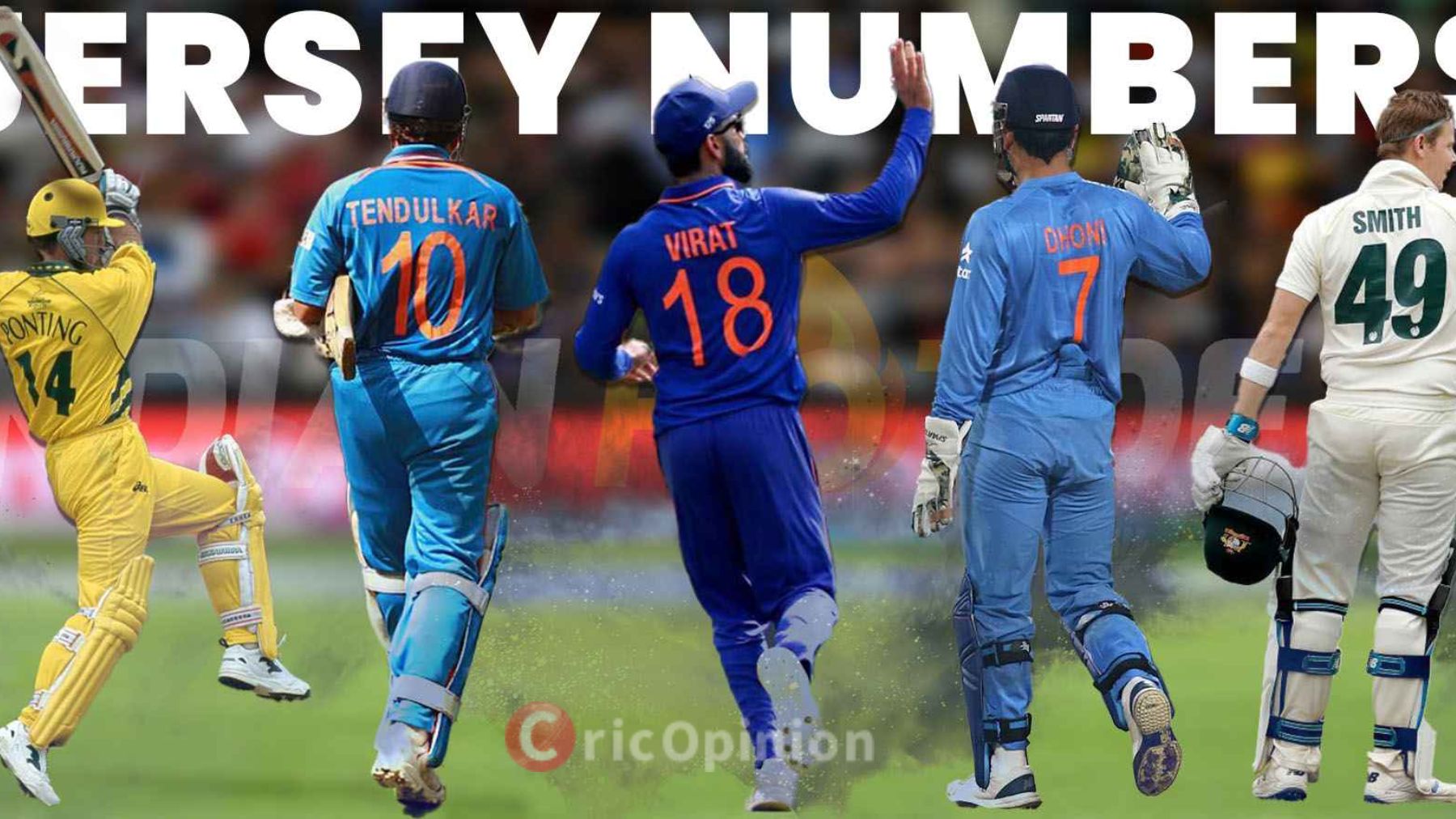
For the better part of two decades, the sight of that broad back with "TENDULKAR 10" written across it was the most excellent reassurance a billion people could ask for. If #10 was at the crease, everything was going to be okay.
Sachin didn't start with #10. He wore numbers like 33 and 99 in his early ODI days. But once he settled on #10 (reportedly due to numerology suggestions that it would bring stability to his massive talent), history was written.
Why it's "Lucky": This number carried the weight of expectation that no human should ever have to bear, and it did so with grace. It delivered the 'Desert Storm', the 2003 World Cup run-fest, and finally, the 2011 World Cup triumph on home soil. The lack of #10 wasn't just about winning matches; it was about defining a generation.
It is so iconic that Cricket India unofficially retired it. You won't see another Indian player daring to wear #10. That’s ultimate reverence.
If #10 was the heartbeat, #7 was the calm, calculating brain.
Mahendra Singh Dhoni chose the number 7 for a straightforward reason: he was born on the 7th day of the 7th month (July). But what he did while wearing it turned it into a cult symbol of finishing tight games and lifting ICC trophies.
Why it's "Lucky": The number 7 became synonymous with the "Midas Touch." When Dhoni was behind the stumps calling the shots, or in the middle during a tense final over, the number 7 exuded an aura of invincibility.
It was on his back when he hit that six in Mumbai to win the 2011 World Cup. It was there for the 2007 T20 World Cup and the Champions Trophy. For fans, #7 means "don't panic until the last ball is bowled." It’s the luckiest number for crunch situations.
For a long time, #18 was just another number. Then came a brash, incredibly talented Delhi boy who turned it into a symbol of relentless aggression and hunger.
Virat Kohli has an emotional connection to the number; it was the jersey number he was wearing during his U-19 days when his father passed away. He kept it as a tribute.
Why it's "Lucky": The "luck" of #18 lies in the sheer volume of runs it produces, particularly while chasing, when India needs 300+ to win, and #18 walks out, the odds suddenly shift. This number has seen some of the most improbable chases in ODI history being completed with surgical precision. It represents a never-say-die attitude that has rubbed off on the entire current Indian setup.
Rohit Sharma’s journey to becoming an all-time great wasn't immediate. He struggled initially in the middle order. But once he opened the batting and donned the #45, things just clicked.
Interestingly, Rohit picked this number based on his mother's suggestion after consulting a numerologist (4+5 = 9, a powerful number).
Why it's "Lucky": If you believe in luck bringing massive scores, #45 is the undisputed champion. This jersey number has seen not one, not two, but three ODI double-centuries—a feat that seems absurd even today. It also saw him lead the Mumbai Indians to five IPL titles. When the #45 gets set, the luck runs out for the opposition bowlers entirely.
Another star who chose his number based on his birthday (the 12th of December), Yuvraj Singh made #12 the symbol of the ultimate match-winner.
Why it's "Lucky": This number has seen the highest of highs in Indian white-ball cricket. It was wearing #12 that Yuvi smashed Stuart Broad for six sixes in an over during the 2007 T20 World Cup. More significantly, it was this jersey that carried an ailing Yuvraj through the 2011 World Cup, where he was named Player of the Tournament while battling cancer.
The #12 is lucky because it represents resilience. It’s the number of the guy you want on your side when the big trophies are on the line.
Do numbers really carry luck? Perhaps not in a scientific sense. A jersey number can't play a cover drive or bowl a yorker.
But in cricket, confidence is everything. If wearing a specific number gives a player that extra 1% of belief, then it becomes lucky. And for us fans watching from the stands or our living rooms, those numbers become the bookmarks for our fondest memories of Indian cricket.




More Links








 FANTASY CRICKET TIPS